Best Time to Visit Gangtok for Sightseeing
Learn the best months to visit Gangtok for sightseeing based on weather, road reliability, and access rules. March to early May and September to October offer the best balance of clear views and excursions.
In this article
- Why the Best Time to Visit Gangtok for Sightseeing Is an Operational Question
- The three tests I use for every itinerary
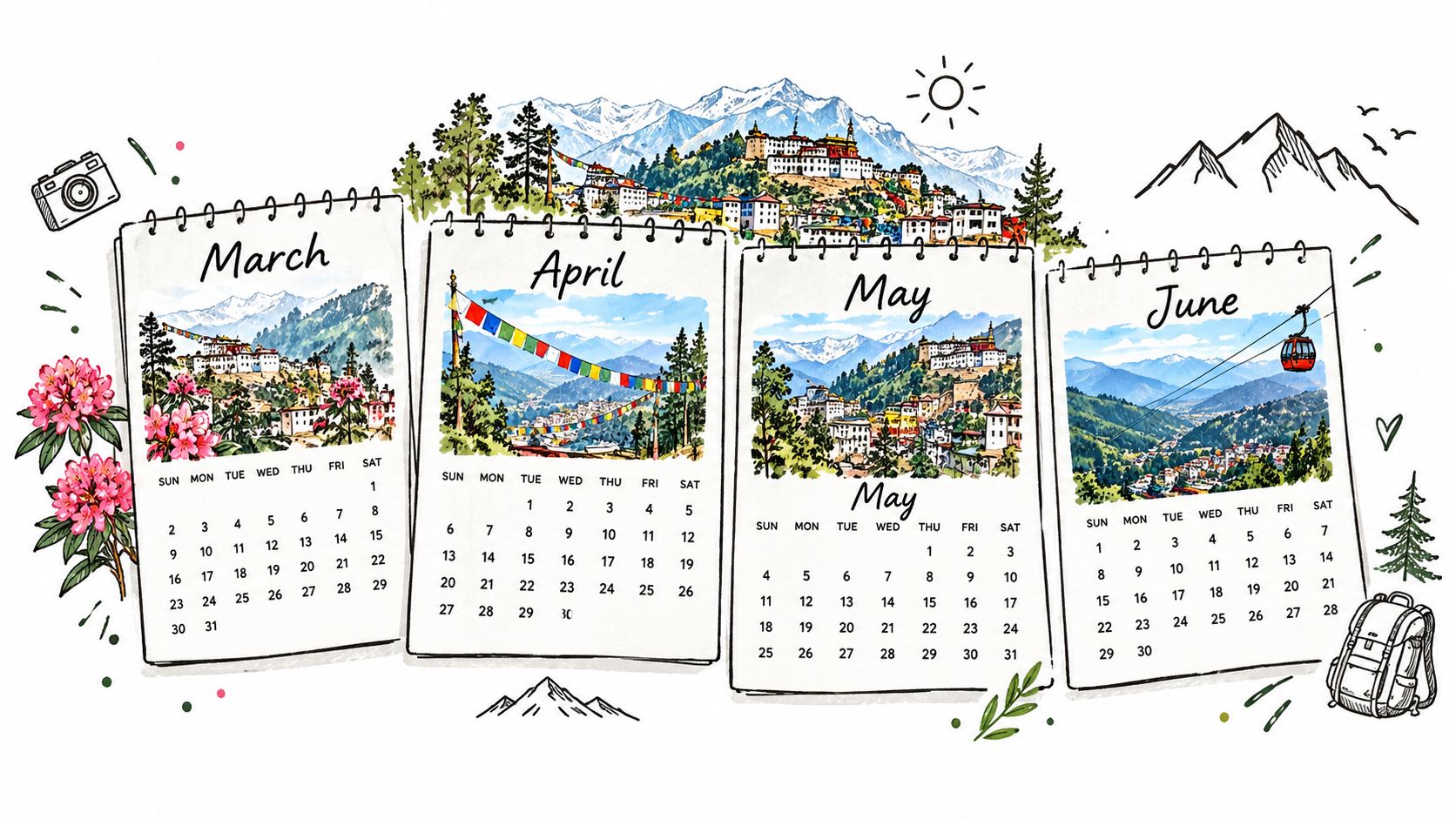
- Month-by-Month Weather and Visibility in Gangtok
- The months worth booking
- The months that demand caution
- Seasonal Pros and Cons for Sightseeing Priorities
- Spring from March to April
- Autumn from September to October
- Early winter from November to December
- Monsoon from May to August
- A Sample Gangtok Sightseeing Itinerary for the Recommended Window
- Day 1 and Day 2
- Day 3 and Day 4
- Day 5
- Permits, Closures, and Access Rules Most Seasonal Guides Skip
- Build the trip around restricted excursions
- Packing, Accommodation, and Booking Strategy by Season
- Pack for changing conditions
- Match booking timing to demand
- Best Months for Photographers, Families, and Budget Travelers
- Photographers
- Families
- Budget travelers
- A One-Paragraph Decision Rule for Booking Your Gangtok Trip
The best time to visit Gangtok for sightseeing is March to early May and September to October, with October to December as the strongest dry-season alternative. Avoid relying on June to September if clear viewpoints and a dependable road itinerary matter, because Gangtok receives about 3,494 millimetres of annual rainfall and averages approximately 184 rainy days.
Gangtok rewards travelers who plan around more than temperature. A pleasant morning in the city doesn't guarantee access to Nathula, Tsomgo Lake, North Sikkim, or a mountain viewpoint later that day. Rain, cloud, saturated slopes, permit rules, weekly closures, and sudden road restrictions can decide whether your sightseeing plan works.
My practical formula is simple: weather window + road reliability + access rules + crowd tolerance = the right month. For most first-time visitors, I recommend March–April for comfortable walks and spring color, or October–November for the best balance of clear views and dependable excursions. December is drier but colder, while May can work if you build in flexibility.
Why the Best Time to Visit Gangtok for Sightseeing Is an Operational Question
Gangtok isn't difficult to enjoy, but it is easy to plan badly. The city sits among steep Himalayan roads, and many of its most memorable experiences depend on visibility and access rather than the temperature outside your hotel. Viewpoints, monastery visits, waterfall stops, and high-altitude day trips all become less predictable when rain and cloud settle over the hills.
The official seasonal pattern identifies March to early May and September to October as the main visitor periods. Winter generally runs from November to February, while the monsoon influences conditions from May to September. The Sikkim Strategic Urban Plan also records heavy rainfall from May through early October, with July usually the wettest month.
The three tests I use for every itinerary
Visibility comes first. If Kanchenjunga views, Tashi Viewpoint, Ganesh Tok, or long mountain drives are central to your trip, you need months that limit persistent cloud and rain. A warm day with a covered skyline is still a poor sightseeing day if your main reason for visiting is Himalayan scenery.
Road reliability comes next. Central Gangtok can remain usable while roads farther north or toward high-altitude destinations face delays. Landslides, debris, checkpoint timing, and weather closures can affect excursions even when city sightseeing continues normally.
Comfort matters, but it isn't the only metric. April and October are especially useful because daytime temperatures are mild, while mornings and evenings stay cool enough for walking. That combination lets you explore MG Marg, monasteries, markets, and viewpoints without the severe cold associated with higher Himalayan areas.
Practical rule: Choose a month that gives you a good forecast, then plan as though one weather-sensitive excursion might move.
The dry alternative deserves equal attention. Official tourism guidance describes October to December as the strongest general sightseeing period, while March–April is the better spring option. November and December are drier, but you'll need warm layers, particularly for early starts and high-altitude routes.
Month-by-Month Weather and Visibility in Gangtok
Rainfall can change a Gangtok sightseeing plan faster than temperature can. April records a typical range of 6.4–22.6°C, while October reaches 10.8–23.7°C. The wet season brings a sharp increase in rain, according to the official Sikkim Tourism climate guidance. Use those patterns to choose dates, then check road status, excursion permits, and weekly closures before confirming a tightly timed itinerary.
The months worth booking
January and February: These cold-season months suit travelers who want quiet streets and a winter atmosphere. City sightseeing remains possible, although mornings are chilly and higher areas may bring biting cold or occasional snowfall. Book this period for a slower Gangtok visit, with flexibility around high-altitude excursions.
March: March opens the main sightseeing window. Temperatures generally range from 4.2–16.5°C, so pack a jacket for morning and evening walks. The cooler air works well for monasteries, markets, MG Marg, and early spring scenery.
April: April is my preferred spring month for first-time visitors. Its typical range of 6.4–22.6°C supports comfortable daytime exploration, while rainfall is about 100 mm, according to the Gangtok district weather record. It offers a strong balance between walking comfort, outdoor access, and manageable weather risk. Reserve accommodation and transport early if your dates fall near a holiday period.
May: May remains attractive for travelers leaving hotter lowland cities, with temperatures around 9.3–23.8°C. Rainfall rises to roughly 192 mm, so build spare time into any route that depends on mountain roads. It is bookable for flexible travelers, especially when city sightseeing matters as much as distant viewpoints.
The months that demand caution
June: Rainfall reaches about 492 mm, and cloud interrupts long-distance views more often. A city-focused break can still work, but high-altitude excursions become less dependable. Avoid stacking every sightseeing day around one viewpoint or one permitted route.
July: I advise against July for a tightly scheduled trip. Rainfall reaches about 733 mm, with roughly 19 rainy days and about 4 sunshine hours per day in one long-term dataset. Saturated slopes, cloud, landslide-related delays, road closures, and checkpoint timing can remove the excursions you planned. Choose another month unless quiet travel matters more than reliable access.
August: Rainfall remains high at about 541 mm. Hillside views look lush, yet roads and viewpoints carry less certainty. Skip August for a first sightseeing trip unless you can accept changed routes, delayed permits, and indoor alternatives.
September: Conditions begin improving after the wettest monsoon phase. Temperatures are typically 16.5–25.7°C, but residual rain and landslide risk still affect road-based plans. Late September is the better choice for travelers who can select their dates, particularly when the itinerary includes longer drives.
October: October is the strongest all-round month for a first Gangtok visit. Temperatures sit around 10.8–23.7°C, greenery remains after the rains, and outdoor conditions generally become more dependable. Book early if clear viewpoints, popular excursions, and preferred drivers matter to your trip.
November and December: These dry-season months suit travelers who prioritize outdoor access and clearer mountain views. Historical climate data records roughly 14 mm of rainfall in both months, compared with about 112 mm in October, as reported in the same Sikkim Tourism weather information. Expect cooler mornings and evenings, so early viewpoint visits require warm layers.
| Month | Typical Temperature (°C) | Rainfall (mm) | Sightseeing Verdict |
|---|---|---|---|
| January | Cold-season conditions | Not specified | Quiet winter travel |
| February | Cold-season conditions | Not specified | Flexible, with higher-altitude cold |
| March | 4.2–16.5 | Not specified | Strong spring opening |
| April | 6.4–22.6 | 100 | Best spring balance |
| May | 9.3–23.8 | 192 | Book with weather buffers |
| June | Not specified | 492 | Risky for fixed itineraries |
| July | Not specified | 733 | Avoid for reliable sightseeing |
| August | Not specified | 541 | Choose only with rain flexibility |
| September | 16.5–25.7 | Not specified | Improving, especially late month |
| October | 10.8–23.7 | 112 | Strong all-round choice |
| November | Not specified | 14 | Dry and good for outdoor plans |
| December | Not specified | 14 | Dry, scenic, and colder |
Seasonal Pros and Cons for Sightseeing Priorities
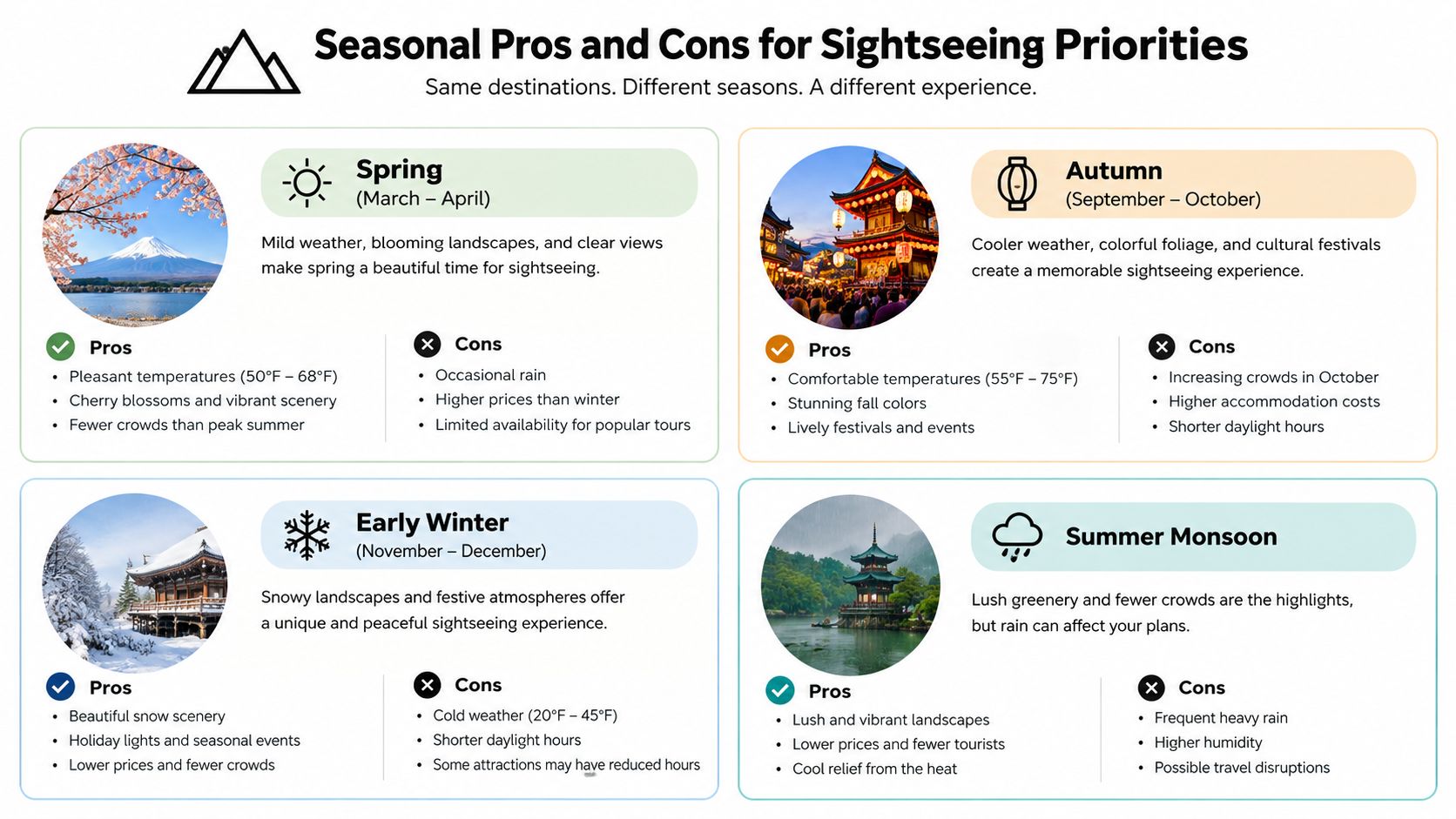
Season choice is an access decision as much as a weather decision. Spring supports comfortable walking, autumn usually restores dependable road conditions, early winter favors clearer mountain views, and monsoon brings greener surroundings with a higher risk of altered routes, road delays, and missed viewpoints.
Spring from March to April
Spring is my first choice for travelers who want color, comfortable daytime walking, and a balanced city itinerary. April makes it easier to combine MG Marg, Enchey Monastery, Rumtek, Banjhakri Falls, and nearby viewpoints without extreme cold or persistent rain.
April also brings stronger demand. It falls within a traditional peak period, so popular hotels, vehicles, and experienced drivers can become difficult to secure during holiday travel. Reserve early if spring dates are fixed.
Autumn from September to October
Autumn improves access after the monsoon, with October offering the better operating conditions. The hills stay green, while prolonged rain becomes less common. October is the strongest compromise month for families, photographers, and first-time visitors who want comfortable outdoor days and a good chance of keeping planned excursions.
September remains less dependable because residual rain can affect roads. Use it when your schedule allows delays and substitutions.
Early winter from November to December
November and December offer the clearest dry-season planning. November suits photographers and travelers who accept cool mornings in exchange for better visibility. December keeps conditions dry and adds festive energy, although high-altitude routes feel considerably colder than Gangtok town.
Officially reported 2025 Sikkim tourist footfall was roughly 1.745 million, with April–May and October–December described as traditional peak periods. December alone approached 200,000 visitors, according to Incredible India's Gangtok travel information. Popular winter dates deserve early booking.
Monsoon from May to August
May is a transition month. It can still support comfortable town sightseeing, but rainfall rises quickly. From June through August, I recommend only flexible plans, especially if mountain viewpoints or long road excursions are priorities. Landslide-related disruption can change route access with little notice, so keep replacement activities within Gangtok.
| Priority | Best choice | Main compromise |
|---|---|---|
| Clear viewpoints | November, October | Cooler mornings or peak demand |
| Comfortable walking | April, October | More visitors in popular periods |
| Fresh green surroundings | Late September, October | Residual rain risk |
| Quiet city breaks | Monsoon months | Less reliable excursions |
| Dry road-based sightseeing | November–December | Colder conditions |
A Sample Gangtok Sightseeing Itinerary for the Recommended Window
A good Gangtok itinerary puts weather-sensitive experiences early, keeps city attractions available for changing conditions, and leaves a day that can absorb disruption. This five-day plan works particularly well in October–November or March–April.
Day 1 and Day 2
Use the arrival day for a gentle introduction. Walk along MG Marg, explore local cafés and shops, and keep the evening unhurried. The next morning, visit Tashi Viewpoint early, when visibility is often more useful than later in the day, then continue to Enchey Monastery, Ganesh Tok, and Hanuman Tok if road conditions are favorable.
Keep the afternoon for Banjhakri Falls or a relaxed return through central Gangtok. This arrangement protects the first full day from becoming an exhausting long-distance excursion.
Day 3 and Day 4
Schedule Rumtek Monastery on the third day. It gives you a substantial cultural and scenic outing without using your most weather-sensitive day on a restricted high-altitude route.
Place Nathula and Tsomgo Lake on the next suitable day, but check permit availability and road status first. Nathula permits are issued Tuesday through Sunday, so Monday can't be used for that excursion. If weather closes the route, move the trip to the flexible day rather than sacrificing the rest of the itinerary.
Day 5
Reserve the final day for whichever experience was delayed, or use it for central Gangtok, monastery visits, shopping, and cafés. Don't place Nathula on your departure day. Mountain routes need schedule space, and a delayed return can create unnecessary transport problems.
For a rainy-season version, shorten each outdoor outing into a morning or afternoon block. Put MG Marg, museums, monasteries, cafés, and local food experiences on the wettest-looking days, while keeping viewpoints and high-altitude excursions movable.
A reliable Gangtok plan doesn't fill every day. It protects the experiences that depend on visibility.
Permits, Closures, and Access Rules Most Seasonal Guides Skip
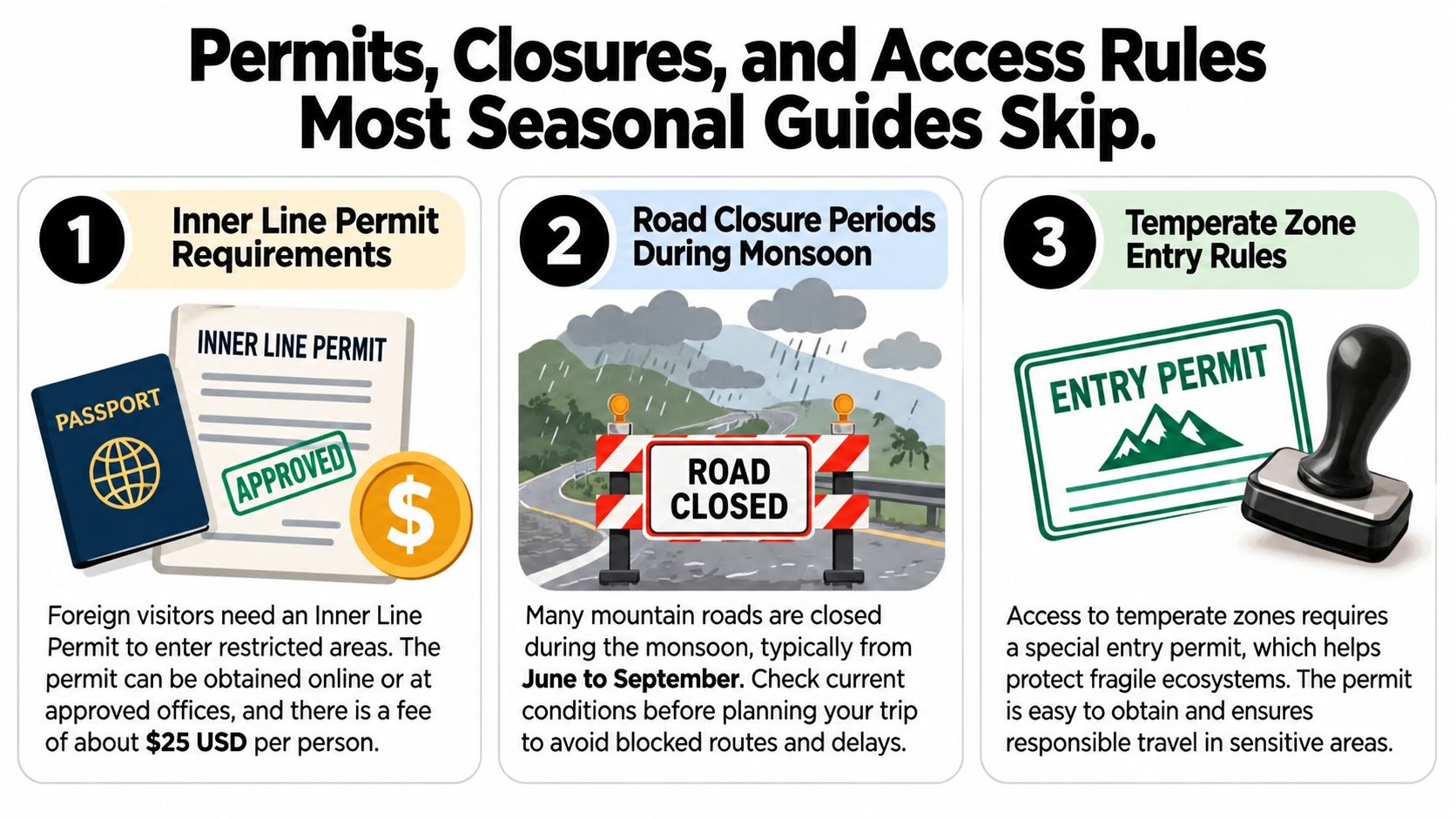
Weather is only one operational risk. Access rules can determine your sightseeing calendar before you consider the forecast. Foreign visitors need an Inner Line Permit to enter Sikkim, and protected areas require additional permits. The official Protected Area Permit guidance also warns that weather-related closures may occur without prior notice.
Nathula is a common planning failure. Permits are issued Tuesday through Sunday, with Monday designated as a no-Nathula day. That weekly closure matters because visitors often build a high-altitude excursion into whichever day happens to be available, then discover that the route can't operate on their chosen date.
Build the trip around restricted excursions
Schedule Nathula, Tsomgo Lake, or other protected-area routes early in your stay, not on the final day. An early booking gives you room to move the excursion if officials suspend travel because of weather, road damage, checkpoint timing, or local conditions.
Recent government updates concerning North Sikkim also show why old itineraries can become obsolete. Destinations that closed after natural calamities later reopened under online permit procedures and strict bridge-crossing deadlines. A pleasant morning in Gangtok doesn't prove that a distant mountain route is open.
Use this operational checklist:
- Confirm eligibility: Check Inner Line Permit and protected-area requirements before booking restricted excursions.
- Check the weekly calendar: Keep Monday out of any Nathula plan.
- Verify shortly before departure: Ask your operator or official tourism contact for current permit and road status.
- Keep one flexible day: Use it for rain, landslides, closures, or checkpoint delays.
- Read the cancellation terms: Make sure your transport and accommodation plans don't punish a weather-driven change.
For current regional travel updates and practical destination information, travelers can also consult Sikkim travel news and updates, then confirm critical access details through official channels.
Packing, Accommodation, and Booking Strategy by Season
Your packing list should follow the month, but your booking strategy should follow the risk level. April and October need adaptable layers. May through August needs rain protection and backup planning. November and December need warmer clothing, especially if you'll leave Gangtok for higher elevations.

Pack for changing conditions
For March–April and October, bring a warm base layer, fleece or light sweater, windproof outer layer, comfortable walking shoes, and a compact rain shell. You may start the day cold and remove layers by afternoon, particularly on urban sightseeing days.
For May through August, a waterproof shell matters more than a fashionable jacket. Add quick-drying clothing, waterproof footwear, a dry bag for electronics, and spare socks. Choose accommodation with dependable hot water and backup power if possible, because wet weather makes basic comfort more important.
For November–December, bring thermal layers, gloves, a warm hat, and shoes with good grip. Higher-altitude areas can be far colder than central Gangtok, and snowfall can affect mountain roads.
Match booking timing to demand
October through December is popular, so secure rooms and transport well before arrival. April and May also attract strong demand, particularly around holiday periods, which can push up rates and reduce your choice of well-located properties.
July and August are the months when walk-in availability is more realistic, but cheaper rooms don't remove the cost of missed excursions. If you choose the monsoon, prioritize a hotel with a pleasant common area, reliable hot water, and easy access to central Gangtok rather than selecting a property solely for a distant view.
May deserves special treatment. Rainfall rises to roughly 192 mm, compared with about 100 mm in April, according to the Gangtok district weather information. Build refundable transport and accommodation options into the plan, and don't book every day around a single mountain route.
Best Months for Photographers, Families, and Budget Travelers
Different travelers need different versions of Gangtok. The clearest month for a photographer isn't automatically the most comfortable month for a young family, and the cheapest season can be the least efficient for someone with limited leave.
Photographers
Choose November if clean Himalayan light is your primary goal. The dry conditions favor viewpoints and long-distance mountain compositions, although early starts can be cold. Choose March–April if your portfolio depends on spring vegetation, flowers, and softer hillside color.
Monsoon offers atmospheric clouds and saturated greenery, but it rarely delivers consistently open postcard views. Bring it into your plan only if you prefer mood, texture, and slow indoor photography over dependable mountain panoramas.
Families
For families, I favor October or April. Both generally support manageable walking conditions, city attractions, and better odds for road-based excursions than the core monsoon months. Keep the daily schedule compact, return to the hotel before fatigue builds, and avoid promising children that a high-altitude viewpoint is guaranteed.
School holidays often overlap with popular travel periods, so family travelers should reserve rooms and vehicles early. A flexible day is especially valuable when children are involved because a weather delay can otherwise disrupt every later booking.
Budget travelers
July through September can offer lower accommodation and transport costs, but the saving comes with a real trade-off: rain, cloud, and road interruptions can reduce the number of usable sightseeing days. This is sensible only for travelers who value quiet streets and flexible plans more than certainty.
A better compromise is often late September or early May, where shoulder-season conditions may offer some savings without taking on the full operational risk of July and August. Compare the total trip value, not just the room rate. A cheaper hotel doesn't help if you need to pay for a replacement route or lose a planned excursion.
A One-Paragraph Decision Rule for Booking Your Gangtok Trip
Treat the best time to visit Gangtok for sightseeing as a decision about viewpoint clarity, road reliability, and crowd tolerance, not temperature alone. Pick March–April or October–November when clear scenery matters most, choose April–May or October–December when you want a lively peak-season atmosphere, and book July–August only if a lower-cost, quieter trip matters more than schedule certainty. Keep at least one flexible day in every season, then confirm your permit status, road status, hotel refund policy, and weather forecast within 48 hours of departure.
For practical Gangtok trip planning, gangtokian.com offers destination guidance to help you choose routes, seasons, and local experiences with greater confidence. Visit the site before booking so your sightseeing plan matches the weather and access conditions you're likely to face.